
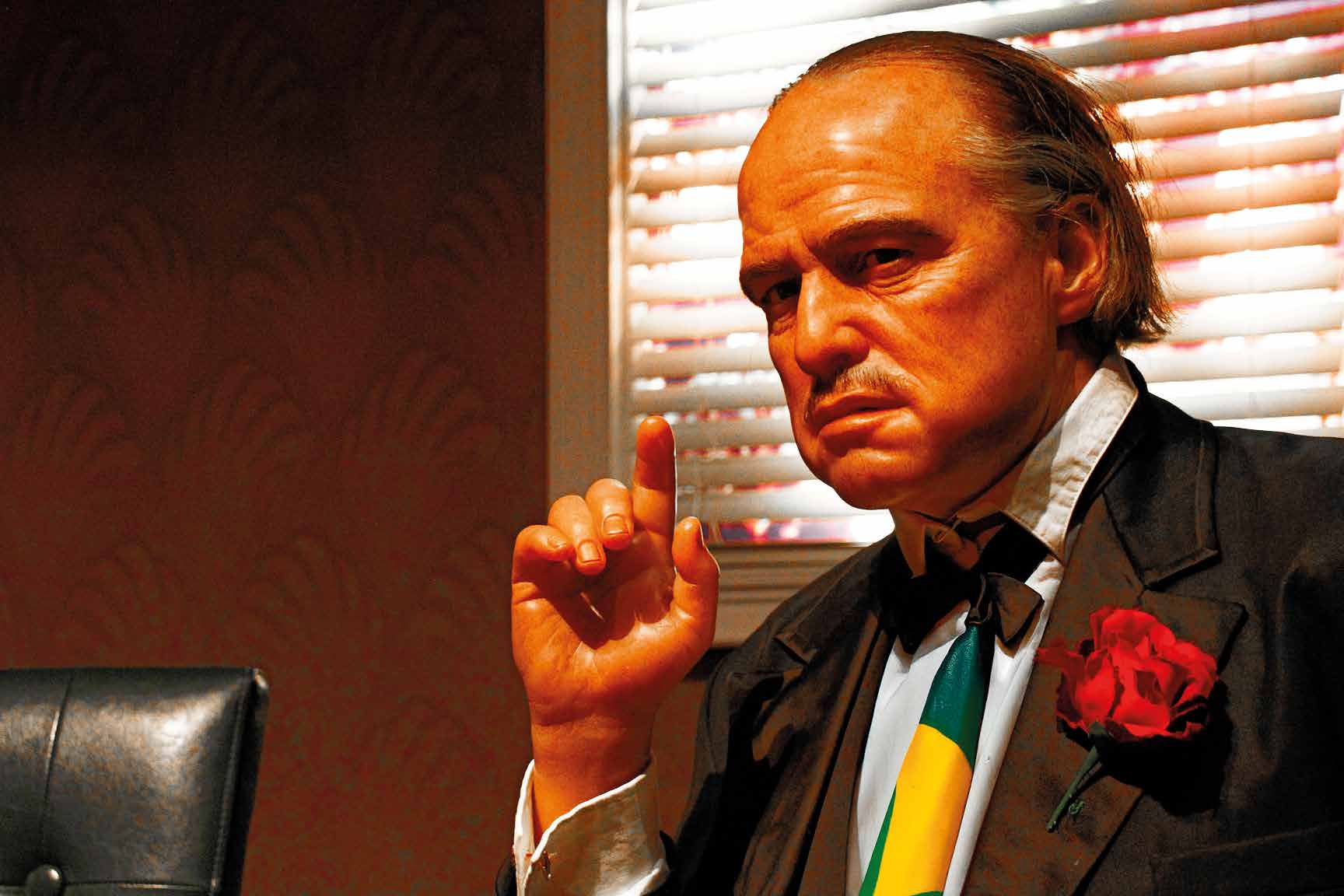
Just as a Mafia Don faces threats and challenges while leading a criminal organization, a CEO in Brazil needs to adopt certain attributes of a mob boss to survive – and thrive – in the hostile environment that is our country.
But what do I mean by “hostile environment”?
Endemic and institutionalized corruption at all levels, and increasingly cynical and normalized impunity. Law enforcement is selective and utterly unpredictable. The “Gérson's Law” still reigns supreme: the cunning are admired, while honest workers are scorned. The honest person is considered a fool and becomes useful for the cunning to gain an advantage.
Good faith and integrity are seen as weaknesses.
Organized crime is infiltrating the formal economy: controlling “legitimate” businesses, they launder money and finance political campaigns.
Honest companies risk unknowingly getting involved with criminal capital — or worse, being swallowed by competition funded by drug money. Given this, the CEO needs to behave like a Don in some way.
Not with violence — but with strategic intelligence, healthy and productive paranoia, and a clear, ruthless internal ethic.
In this paper, I will discuss some cases where the CEO needs to "don the tuxedo" of Don Corleone.
“Keep your friends close — and your enemies closer.”
This phrase, immortalized by Al Pacino in “The Godfather,” is a great lesson for business leaders.
Your enemies can be: competitors, former employees, old suppliers, litigious partners, corrupt authorities, companies trying to take over your business from within. Sometimes, the enemy is your own partner. Or that smiling “strategic partner.” It could be a crime-infiltrated group trying to coerce your company into being used as a money-laundering tool.
They might try to buy you out. If that doesn't work, they might threaten your integrity. Or your family. Even with threats of violence or bogus blackmail. Whether in Brazil or anywhere else in the world, corporate disputes and lawsuits have led to assassinations.
Lawsuits are used for extortion. False accusations, fabricated investigations — all part of the game.
The first two are easy: keep the good and fire the bad. The greatest danger lies in number 4. In countries with strong institutions, unethical behavior can be contained by compliance and governance. In Brazil, it corrupts and contaminates the company's culture.
Therefore, the unethical — no matter how brilliant — must be removed. Conversely, the honest and loyal, though not as brilliant, will never betray you and can be trained.
In the mafia, dishonesty is part of the business — but never within the organization. Lied? You're punished. Stole?
You're dead. Literally. Another principle: highly competent and very ambitious members are, at heart, disloyal.
They want the boss's job.
In the Brazilian corporate world, the logic is similar.
We can divide employees into four categories:
The first two are easy: keep the good and fire the bad. The greatest danger lies in number 4. In countries with strong institutions, the unethical can be contained by compliance and governance. In Brazil, they corrupt and contaminate the company's culture.
Therefore, the unethical — no matter how brilliant — must be removed. The honest and loyal, but not-so-brilliant, will never betray you and can be trained. 04
Mafias have their own justice system — fast, internal, and definitive. In Brazil, an organization cannot rely solely on the police or judiciary to investigate or judge.
Internal governance must be stronger than external chaos. The mafia boss strategically uses fear and reward, blending generosity with threat. For the CEO in Brazil: treat employees, partners, and collaborators with dignity and respect. Reward loyalty generously. But if your benevolence and good faith are abused, then act with ruthless firmness. Without mercy.
In the mafia, two roles are essential: the Consigliere and the Cleaner.
The Consigliere is the strategic advisor, cold and detached from emotion. In the business world, they are the trusted consultant who advises on corporate disputes, extortions, or threats.
The Cleaner is the crisis fixer – the guy who cleans up the mess. Like Mr.
Wolfe in Pulp Fiction, he steps in, assesses, calculates risks, and resolves the situation. In real life, "messes" can include: a corruption scheme within your company; the suspicious death of an executive; blackmail. It could even be a daughter who suffers an attack in Europe, and it's necessary to prevent it from becoming a police case — before the criminals discover who she is, and who her family is.
The Wolfe methodology follows four steps: assess, investigate, analyze risks, and execute the strategy. Thus, the consultancy functions as both Consigliere and
Cleaner: cold, objective advice, and ruthless cleanup.
Brazil is an environment where good faith can be perceived as weakness. The CEO needs to adopt the cunning of a Don: cultivate loyal allies, neutralize traitors, strengthen internal governance, and never rely solely on external law.
Power is maintained not only through generosity, but also through discipline, vigilance, and firmness.
Solutions for Organizations Under Threat


.svg)
